Your piano is out of tune. Your wallet doesn’t have to be. Now you can learn how to tune your own piano at home.
Turns out you don’t need a mystical inner circle of piano tuners to get your instrument sounding right. All it takes is a tuning lever, a good ear, and the nerve to twist a few hundred tightly-wound strings without panicking. We’ll show you how to tune your own piano surprisingly well.
Want to know when this guide goes live? Email at tomdans6@gmail.com to get on the notification list.
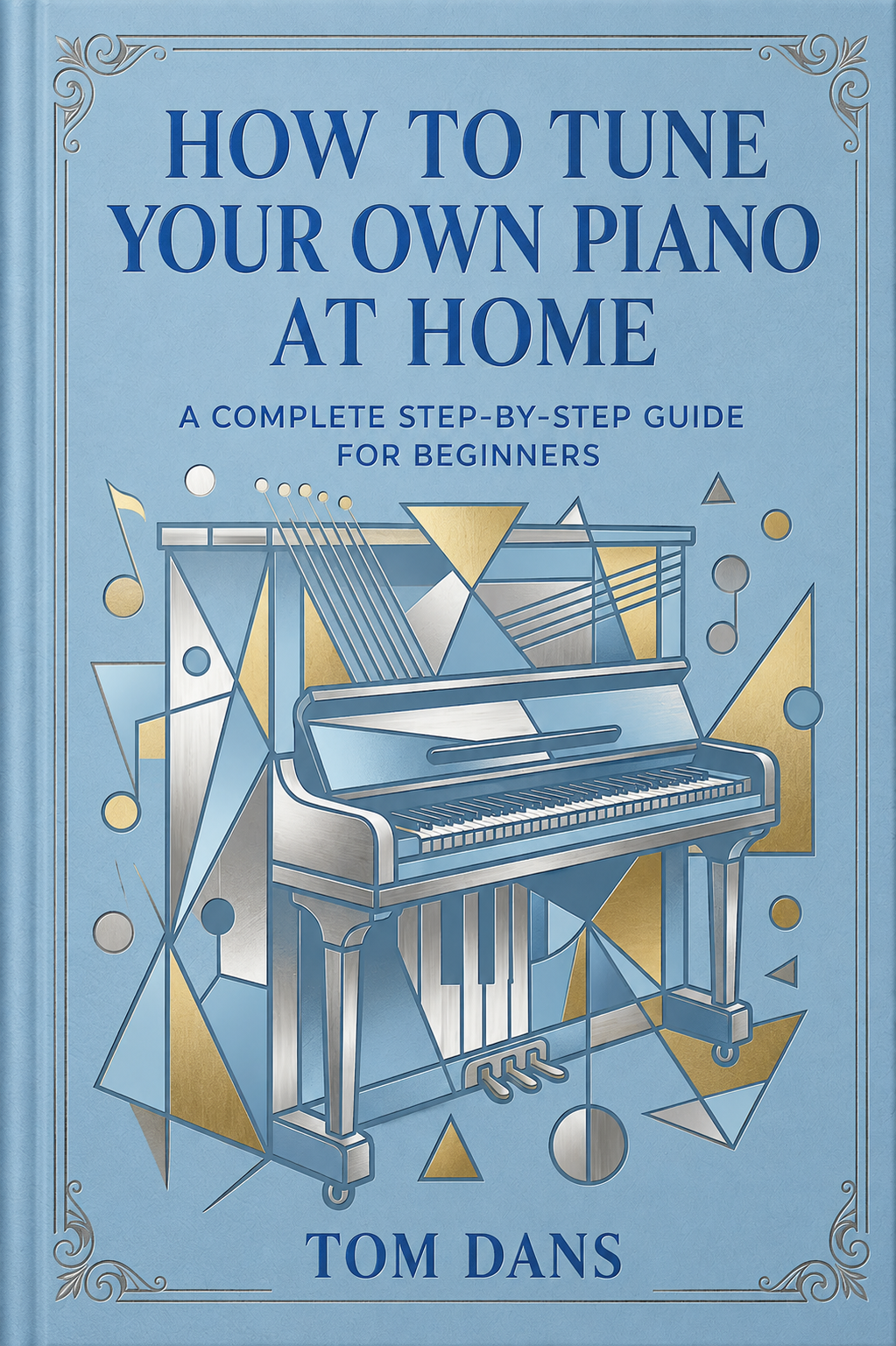
The piano tuning guide for people who Googled “how to tune a piano yourself” and ended up here.
How to Tune Your Own Piano at Home is a practical, genuinely useful guide to one of the more ambitious home improvement projects available to the modern piano owner. Written by a working Connecticut piano tuner who taught himself the trade, it covers everything you need to know — tools, technique, equal temperament, stretch tuning, why the cat left, and when to stop — in language that assumes you are intelligent, curious, and maybe not going to end up tuning your own piano.
But you might. And if you do, this book will help.
What’s inside:
- The tools you need, where to get them, and which one you will definitely lose
- How piano tuning actually works, including the parts nobody explains
- Why your piano is out of tune and why it will always be out of tune and why that is fine
- The three principles of home piano tuning: experimentation, persistence, and listening
- A complete quick-reference tuning guide in the Appendix, for people who don’t read directions
- One recurring cat
A beginner’s guide to piano tuning at home — tools, technique, and knowing when to stop.
Whether you’re a curious piano owner who wants to understand your instrument better, a DIY enthusiast who has already fixed the sink and cut their own hair and is looking for the next challenge, or someone who simply cannot justify another $185 tuning bill, this book was written for you.
It was also written for people who will read it, decide they’d rather call a professional, and feel much better informed about why that was the right decision.
Coming soon. Get on the notification list above and we’ll let you know the moment it’s available — at a price that costs considerably less than a professional tuning and causes considerably less anxiety than attempting one.